



I learnt this from an engineering director at Google in New York. He ran a workshop that got internally-famous about communicating with execs and senior leaders.
It was one of those holy-shit-why-didn’t-anyone-teach-me-this-sooner moments.
Simple enough for early career, and I still use it to this day before every big update.
It’s called AAA.
Altitude. Audience. Action.
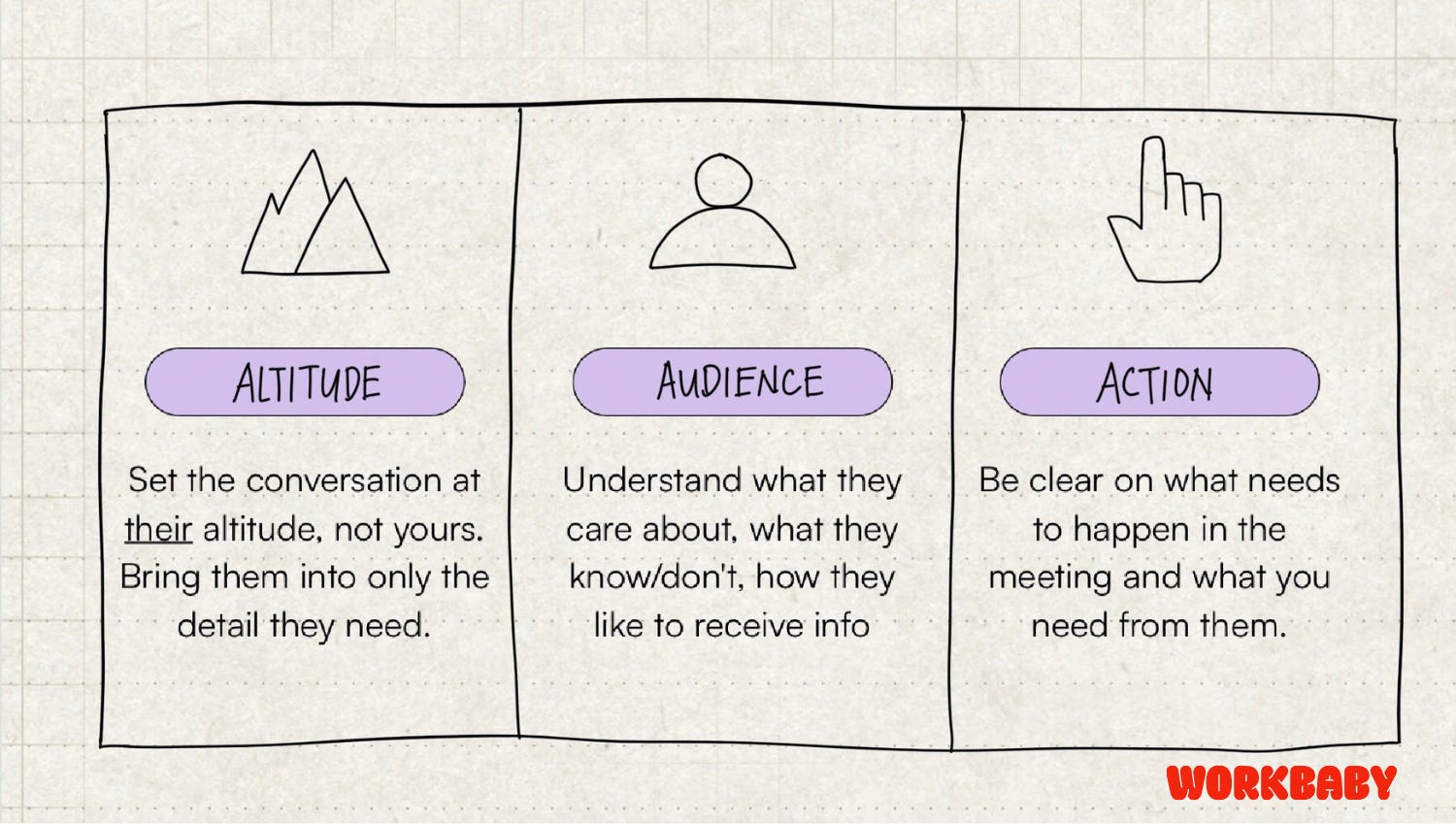
First, the three ‘aha’ moments you need.
1. They’re not thinking about your thing
When you’re an individual contributor, you spend 110% of your time thinking about your set of problems. The person you’re talking to spends maybe 5% (or none!) of their mindshare on that. Yours will be one of 20 different topics they’ll be dropped into today, while they receive 700 Slack messages.
2. People think execs hate detail. They don’t.
They just want the right detail. You operate at fundamentally different altitudes (both are important). It’s your job to meet them where they are and bring them into the evidence, examples, data needed to do the communication job. You communicate high and low.
3. Your structure typically inverts
Most people build up to their point:
context → what I did → more detail → conclusion
But execs are filtering for: is this important? what do I need to do with it? So put that up top.
Cool… how do we do all this?
Here’s a real example from my own job
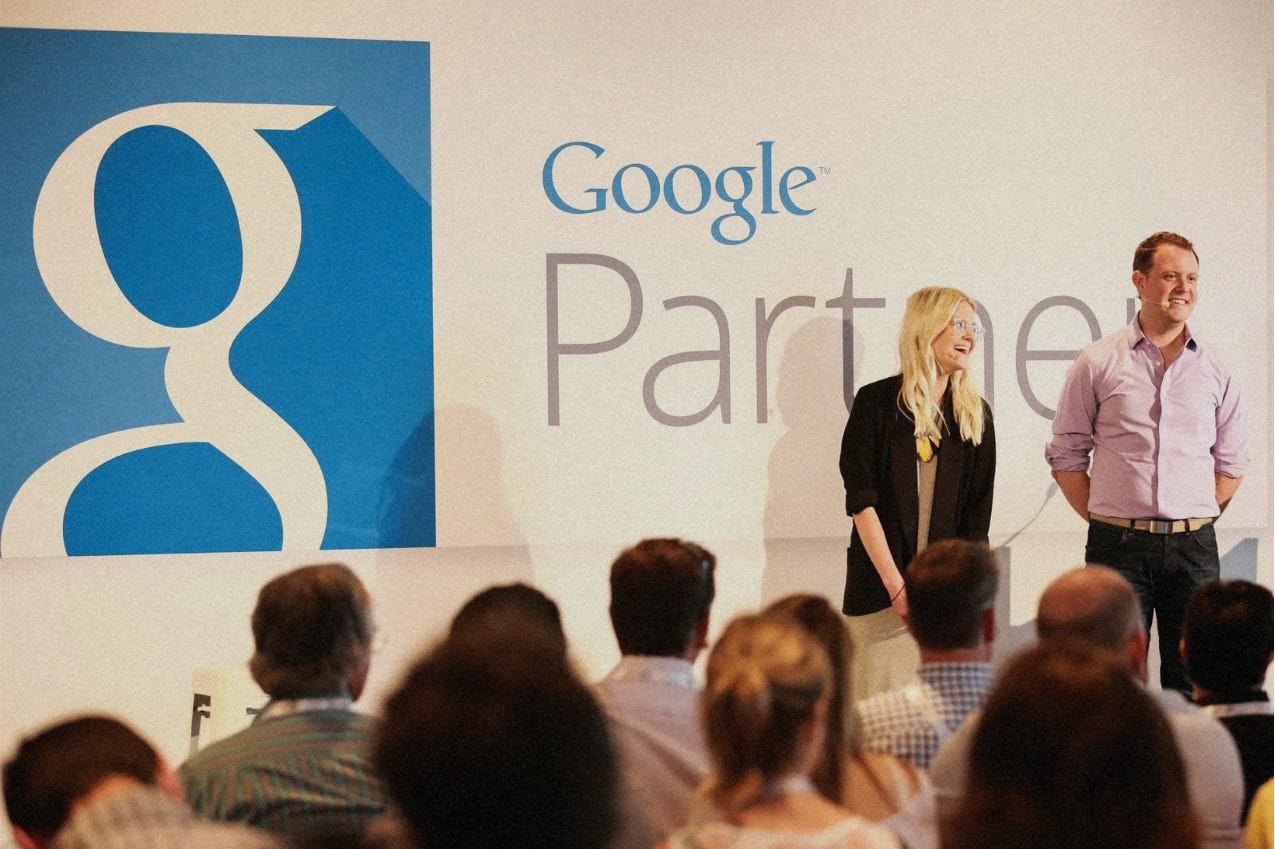
Junior marketer, I owned a program called Google Partners, inside the Small Business team. I had 15 mins with the CMO, trying to get support for a call centre issue.
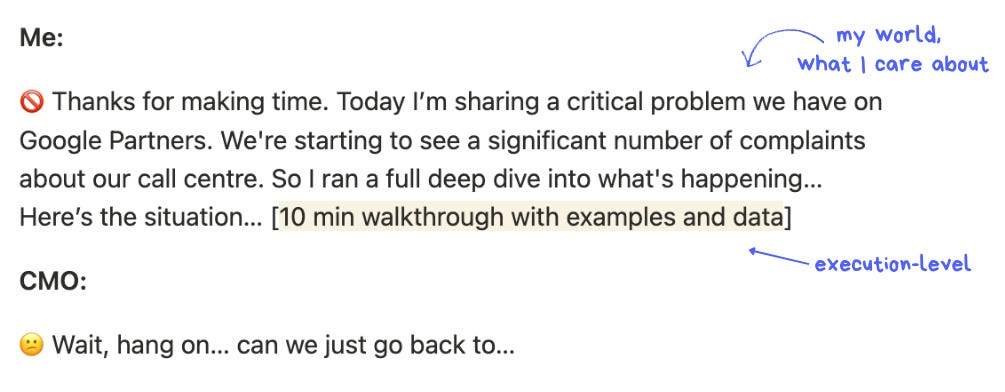
Setting it to my altitude looked like this
Matching their altitude looked like this
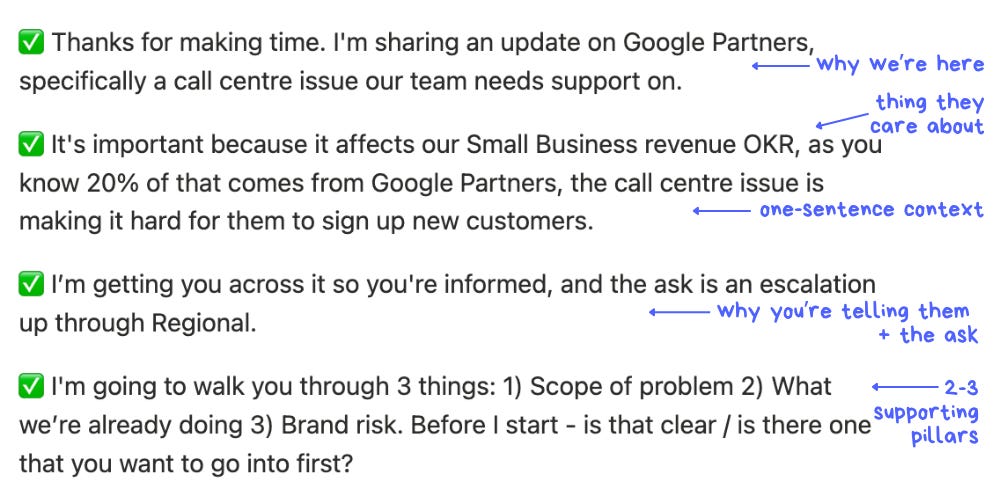
Then dropping into detail made sense
➡️ Did she want to hear a 4min call centre recording of the crappy customer experience? YES. Best part of the meeting. But I didn’t lead with it.
➡️ Did she want me to walk her through the detailed diagnostic map? No. But I showed it was there if she did.
Why was it better?
✅ Mindshare. She owned 9 product areas (YouTube, Hardware…). Small Business was just one of them… Partners was just one program inside that. So I led with what she thought about most: SMB revenue.
✅ Setup. I said where we were going before we went there. Then she could follow me into the detail without going dead in the eyes.
✅ Framing. Mapped to what she cared about (brand risk, is this happening in other markets? what are their CMOs doing?…) and her style (hated slides, loved a doc and conversation).
✅ Evidence. 3 supporting points → then detail as proof (data on affected accounts, screenshots of social comments). I showed her what else I had (deeper analysis) and let her decide if she wanted it.
To get there, I used AAA.
How to use AAA in your job
To get the right Altitude, you need to think about the other two As. It’s not strictly sequential. I end up going back and forth across all three. AI is super helpful for walking you through something like this btw.
Audience:
Which of their priorities connects to my thing? What are they measured on (metric/OKR)? What do they care about, worry about, not stop talking about in the company meeting?
What’s their exposure to my area? How much do they know/not about this? What’s the smallest amount of context I could give them so they get it fast?
What are their common questions, pushbacks, pet topics? Anything they’re personally optimising for?
What do they need to make fast decisions in the moment? How much data? Whose POV do they always want?
Learn their meeting style. slides/no slides, vibe on pre-reads, etc.
Find people who present to them a lot → get them to show you what they did. Run your plan past them. Ask: how will it land? what will I get asked?
Action:
What do I need to get out of this meeting? What do I want to be true when it ends?
What action do I need from this specific person? Decision, a resource, a sign-off, or just informed alignment? (even then they’re going to want to know: ‘what do you need from me?’)
Altitude:
What’s the most important thing I need to land? How could I say it in 30 seconds?
Imagine them saying: “so what, what does this mean?” → What would my answer be?
What are the 2-3 strongest points that support my argument, and best piece of evidence for each?
Show them what you could show them → hyperlink into your appendix
If the meeting gets cut to 5 mins, what stays?
There’s no single formula for an exec update. But if you do the AAA-check, you’ll be ahead of most people.
Altitude goes both ways
Good leaders can drop down into the execution-level. Bad leaders can’t (or won’t). Altitude ≠️ “high-level” the whole time. You know more than the exec about a lot of important things. That’s why you’re in the room. Own it 🤍
Love Soph x

PS - I wrote this Substack with my voice using this dictation tool I’m in love with. As a three-finger typer it genuinely changed my life (affiliate link, but I’d still recommend it to you even if it wasn’t).
The “altitude goes both ways” point is especially interesting. It makes me think good communication may be less about simplifying information and more about helping someone move between levels without losing what matters at either one. The detail isn’t the problem. The question is when the detail becomes useful.