


The beloved cross-functional initiative. Getting two (or more) teams with competing priorities to move forward together is a specific type of pain.
If you’ve hit the breakdown point with a stakeholder and it feels like.
You just.
Can’t.
Step 1: Break the me vs you dynamic
“Our teams have different priorities.
That’s what makes this hard.”
This is my go-to phrase to get the tension out. It’s light. It takes it to the structural level, and away from the personal which is why it works. It’s kind of like saying: “hey this sucks a bit and it’s not our fault”.
Step 2: Get inside their world
My flow for this is usually:
What actually matters to your team right now?
What does success look like for you on this?
Where’s the pressure coming from on your side?
Is there anything you’re worried about personally that’s making this hard?
You’ll learn interesting things like:
There’s a hidden constraint they never bought up
Their priorities are pretty different to what the Q1 deck says
They’ve committed to something they’re scared to walk back
The resistance isn’t coming from them. It’s two levels up.
Assumptions that might not be true
An agenda behind the agenda
It’s not about bending to that team or person.
So often we jump straight to persuading. It’s smarter to understand their world first. You’ll have better intel, and they’ll be less defensive going into the next part.
Step 3: Get on the same side
This is both literal and metaphorical.
Literally sit on the same side of the table.
A forensic psychologist explains in this pod episode (great listen btw!).
We naturally default to sitting directly across the table (180°), but that creates more guardedness because the eye contact gets intense and the table itself is a physical barrier. Sitting on the same side, or in a V-shape, moves it away from this power-based hierarchical relationship, to “We’re in this together, what is it we’re trying to solve?”.
And it’s also a mindset.
Really try to imagine you’re on the side side, the same team. If you wind things back, at some point, you have a shared goal (even if it’s - we don’t wanna work weekends for this stupid project.)
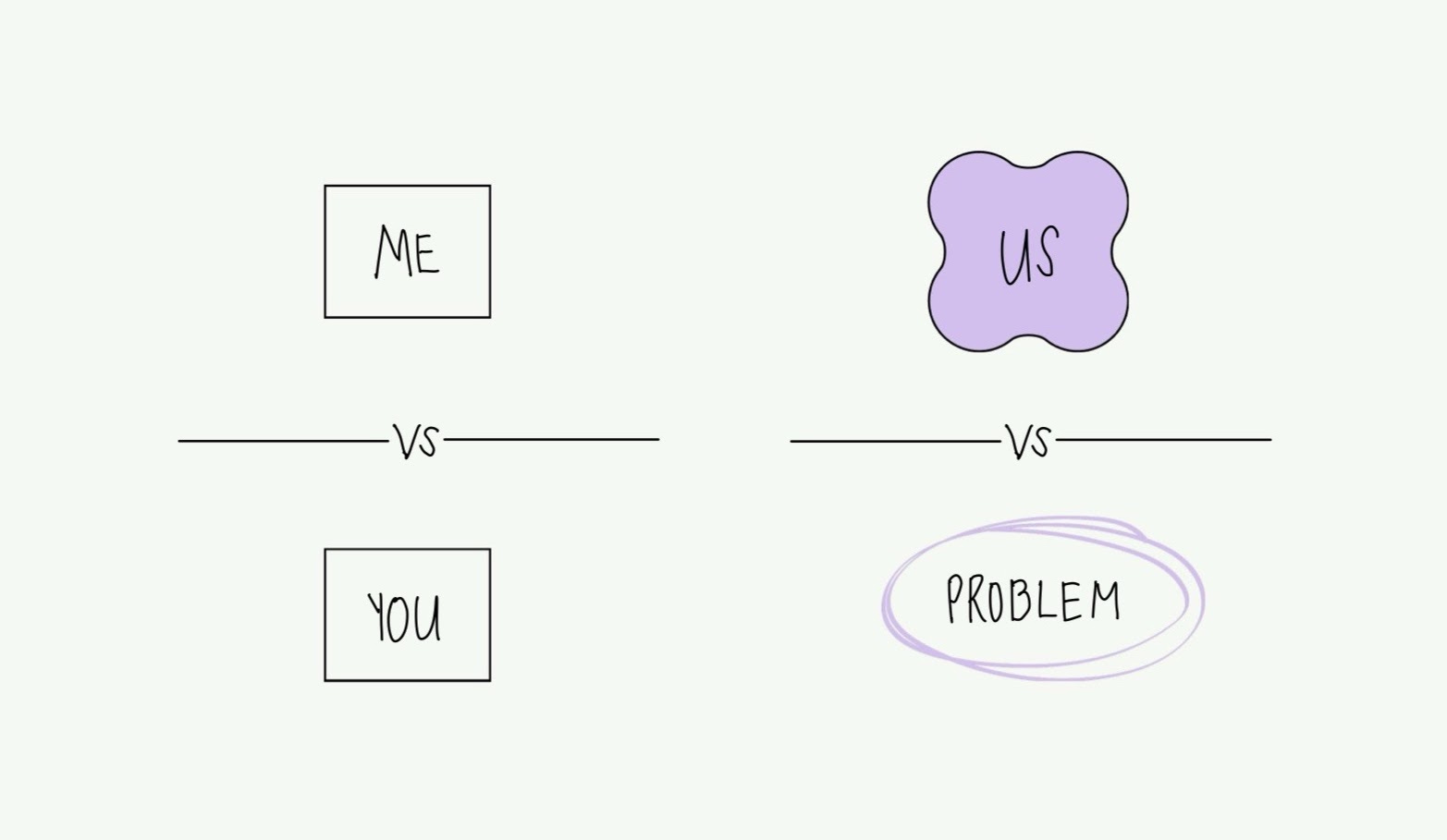
It’s not me vs you. It’s us together vs the problem on the other side.
Reflect their situation back
“Yep, I’m hearing you need X because of Y.
We’re stuck on this part ____. “
They won’t hear you, until they feel heard.
Share your team’s perspective
“I want to share what’s going on on our end as well, it’s relevant to how we solve this.” or
“Thank you for sharing this. I’ll share the honest picture from our side...”
Talk through your team’s priorities, capacity constraints, needs.
Explore the problem together
“What if we looked at it like this…?”
”What does a version of this look like that does work for your team? Here’s a version that could work for mine…”
This opens the conversation up so you can look at the problem together, instead of from opposite sides.
Sometimes you’ll find ways around it that you hadn’t thought about before. Sometimes you’ll find your stakeholder isn’t the same type of empathetic collaborator you are …
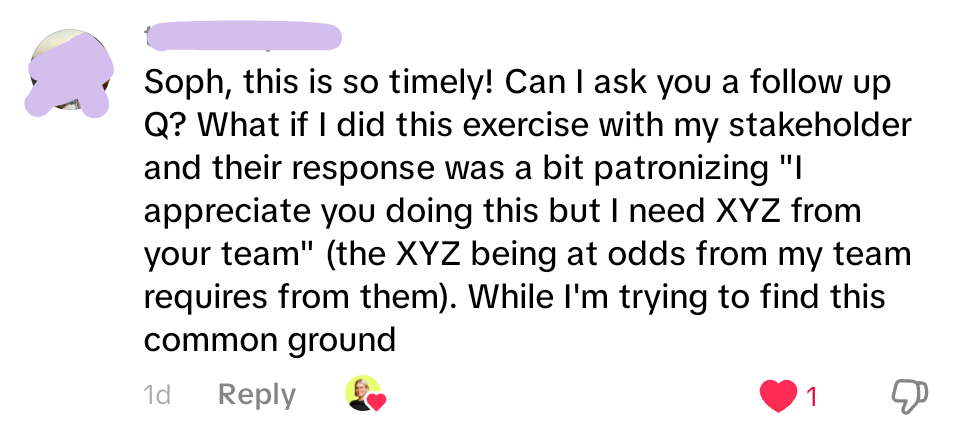
(Side-note: patronising co-workers can go to hell 😛 but we’ll take the high road and assume they’re not trying to be patronising, they’re under pressure).
What to do when they won’t come to the party?

Your stakeholder gives you nothing to work with. Now what?
So many factors come into play.
How aligned is it to the project outcomes? Is this actually within your team’s scope? Does the ask have broad stakeholder support, or mainly their team pushing? What’s the long-term cost, to the relationship and the business, of saying yes vs. no?
Here’s a story of when this happened to me
I was a mid-level marketer working with a stakeholder on a joint initiative between Marketing, Policy, Comms and a few other teams.
Their team wanted double the events we’d scoped. We wanted to do even less events than on the current plan. I tried to find common ground - maybe we could do a few more, maybe we could delay to a later quarter when our team had more capacity, maybe we could…
It didn’t work. It escalated.
The problem turned out to be part of a much bigger structural problem. Teams feeling Marketing was a bottleneck for events in general. Marketing feeling we were viewed as a glorified events agency, when our actual OKRs were far greater (revenue targets, product launches, multi-million dollar campaigns). Plus, we had standards for what a ‘good’ event meant.
Months (years?) of meetings. Many layers of stakeholders later (the right people need to get involved). And what came out was an option we hadn’t really considered at the start. Stephen Covey calls this the third alternative. He wrote a book on it.
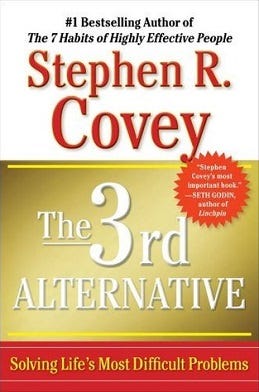
Our third alternative was a way to make other teams (semi)self-sufficient in running lighter-touch events. Removing Marketing from the logistics and reputational accountability, but with touch-points in place for brand safety.
The problem we originally thought we were solving:
How do we get better at saying no?
Ended up being:
Might there be a way teams could safely run their own events?
This isn’t to say there’s always a third alternative. Often it is compromise or standing ground or saying no.
This is to say:
If you’ve tried ✅ talking through constraints, ✅ framing it to the neutral company goals and shared project outcomes, ✅ changing the ask in some way, and you’re still at an impasse…
It needs to go up.
In my experience, most persistent cross-functional problems can’t actually be solved laterally.
Step 4: Name the impasse, escalate collaboratively
“Sounds like we’re both working with genuine constraints that aren’t going away. Who else needs to be in this conversation so we can move forward?”
“Feels like we’ve hit the limit of what we can sort out between us. How do you want to approach the next step to bring [your manager, their manager] in?”
I got exhausted writing this. So if you’re dealing with cross-functional situations right now, you’re probably very tired.
It’s bloody hard. My heart is with you.
Love Soph ✌🏼
PS - I wrote this Substack with my voice using this dictation tool I’m in love with. As a three-finger typer it genuinely changed my life (affiliate link, but I’d still recommend it to you even if it wasn’t).
Thank you for these tips. 10/10 will use.
Love this mindset shift. One that I’ve used in my personal relationships and should be translated over!